Engaging UNICEF Donors Using Nostalgia
Challenge
In September 2020, UNICEF USA challenged my team to reimagine how they engage major donors during Covid-19. As an organization that generates the majority of its revenue (tens of millions of dollars) through its famous formal gala events, UNICEF USA found itself having to pivot from its traditional strategy to one that embraced the constraints of event-based fundraising in 2020 — digital-first and socially distant.
OpPORTUNITY
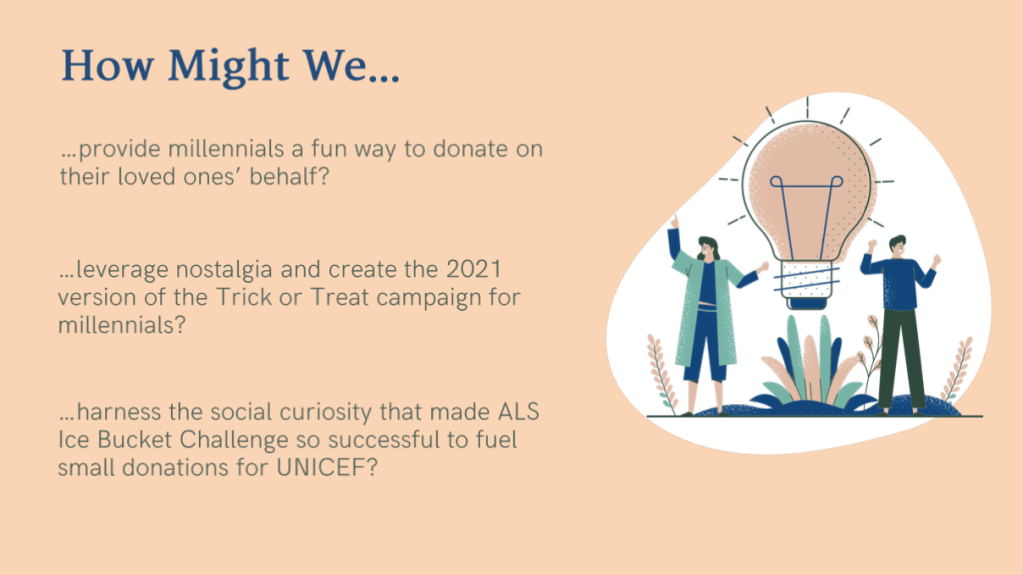
How might we re-engage millennials to raise awareness and build habits of giving to UNICEF USA during this unique time?
Focus Area & Skills
- Concept development
- The five-day Design Sprint methodology pioneered by Google Ventures
- Prototyping, testing, and iterating on product mock-ups
Key Learnings
- The Design Sprint truly delivers quick feedback, especially when you need immediate insight from users and cannot afford to include a formal beta in your product development cycle.
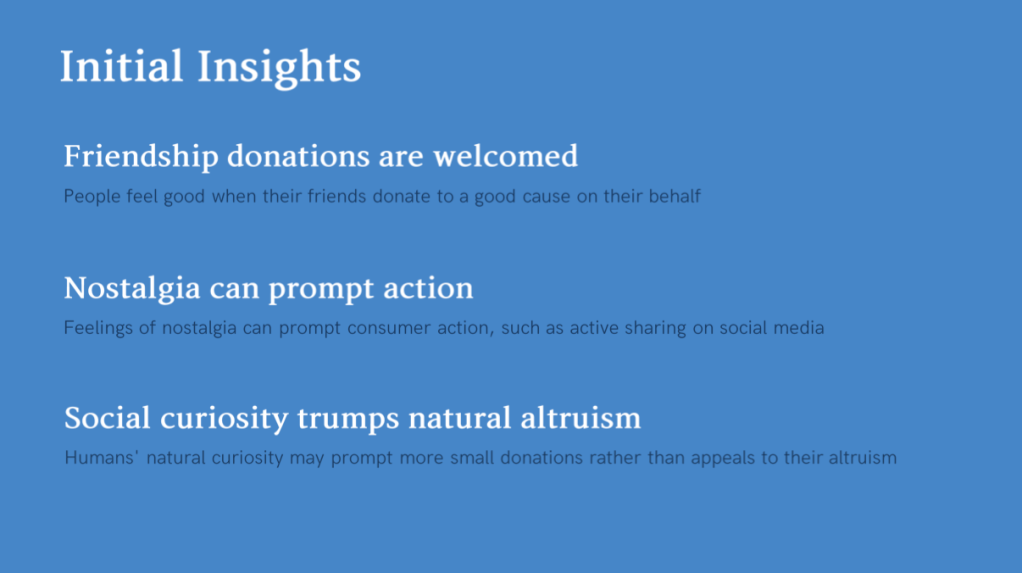
- Feelings of nostalgia (sharing something from one’s childhood with friends and family) and social curiosity augmented by social proof (getting nominated for the ALS Ice Bucket Challenge by your friend’s instagram post) are more powerful catalysts for donating than relying on people’s natural altruism.
Our Design process
We approached our project with the Design Sprint methodology, a process of testing new product ideas in a way that prioritizes learning, iterating, and failing fast.

Companies like Nest, Flatiron Health, and Medium used this approach to test-drive innovation outside of their standard product management lifecycle. We were excited to try this approach for our UNICEF challenge!
Phase one: Map & Choose a target
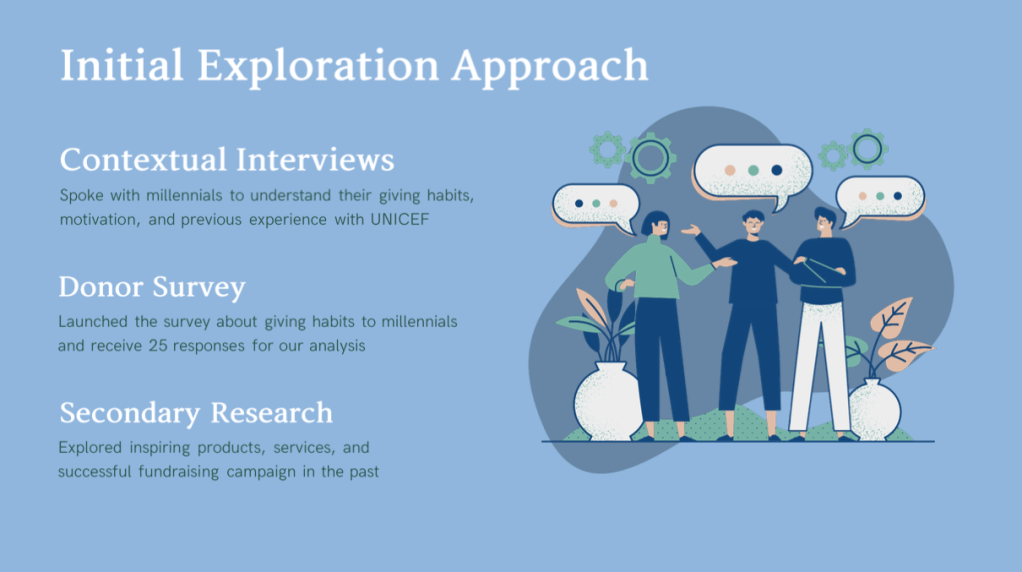
UNICEF USA’s donor base was comprised of: major donors, corporate, opportunity, boards and committees, and next generation. After conducting initial research via a survey and user interviews, we deliberated on the tradeoffs of pursuing certain users and decided to focus on the next generation audience, specifically millennials.
Phase Two & Three: Sketching Competing solutions
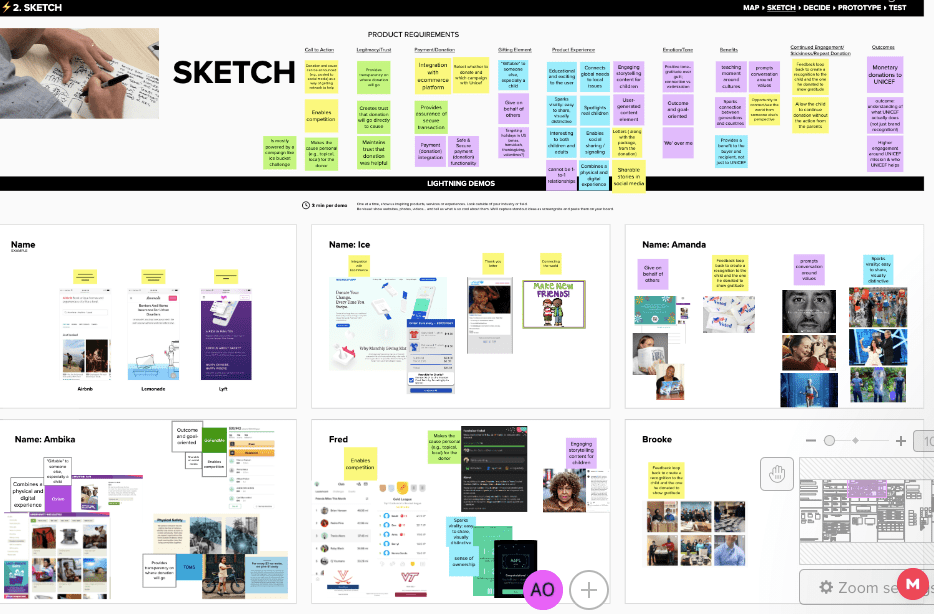
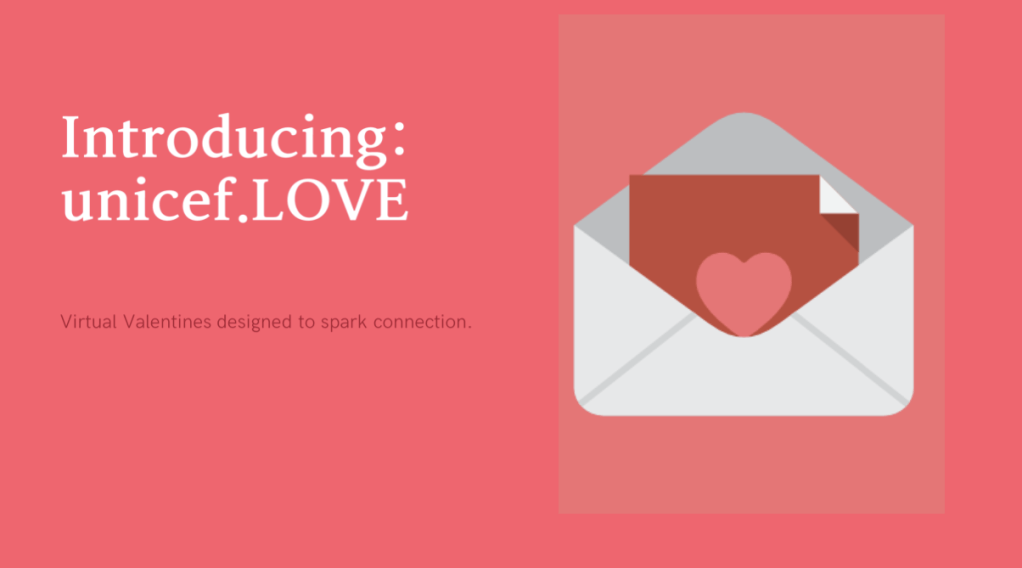
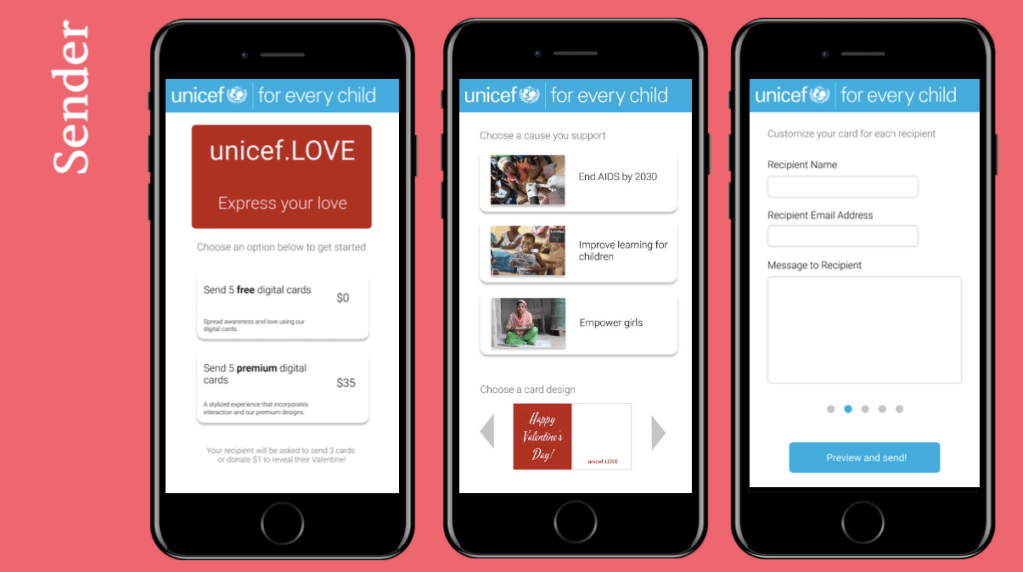
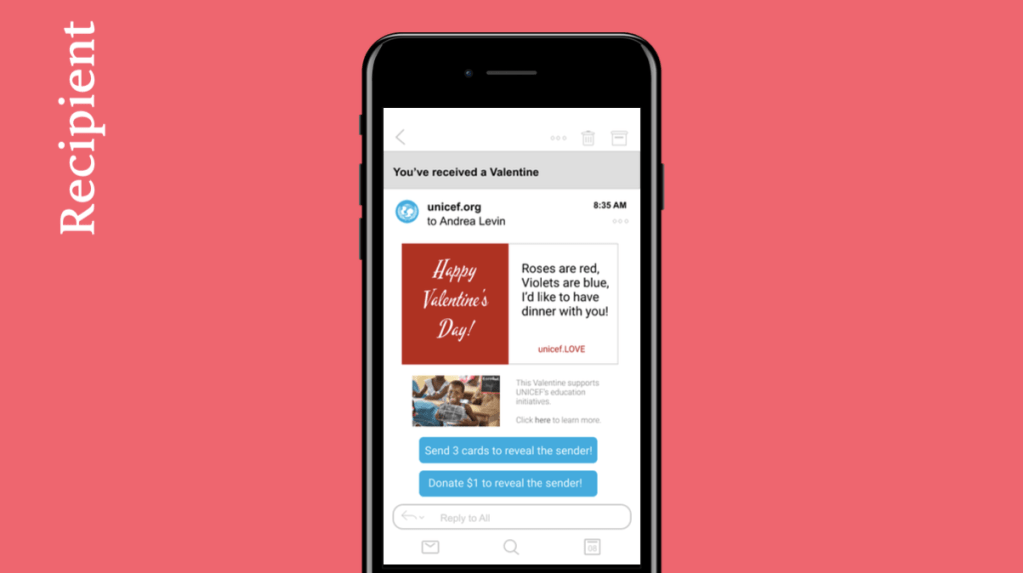
We used Mural to separately sketch our own solutions, then came together as a group to select one idea to test. Our team was most excited about a Valentines Day concept that promoted small donation giving and played on millennials’ nostalgia from UNICEF’s Trick or Treat campaign.
Phase Four & Five: Build a Prototype and TEST!
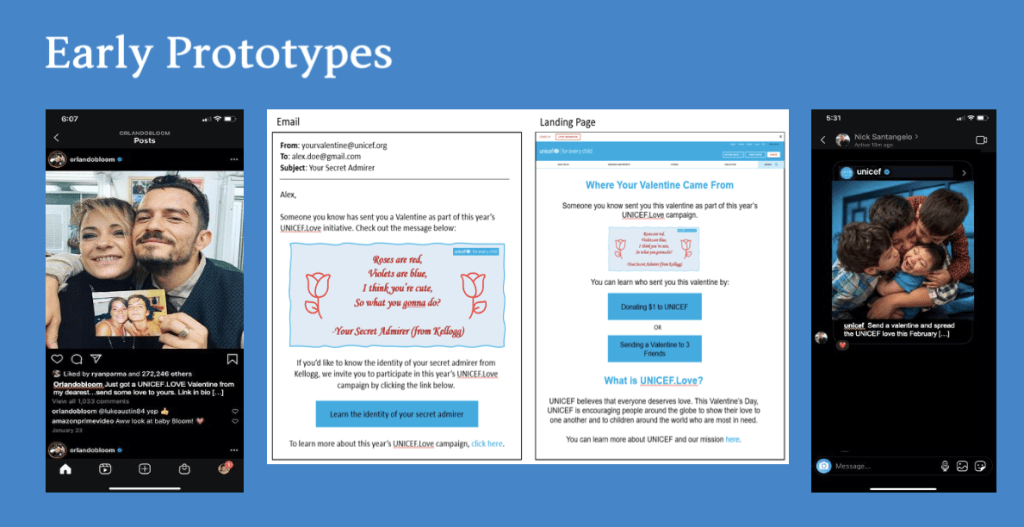
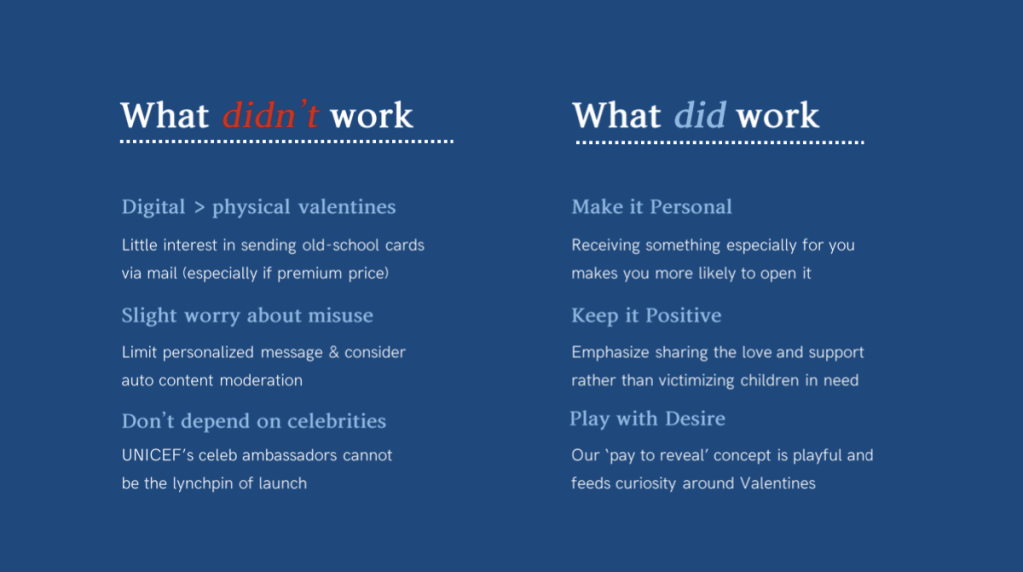
After building an early prototype, we tested our mockups with users. Hearing their reactions to even our low-fidelity mock-ups was incredibly insightful.
Excerpts from Our final product
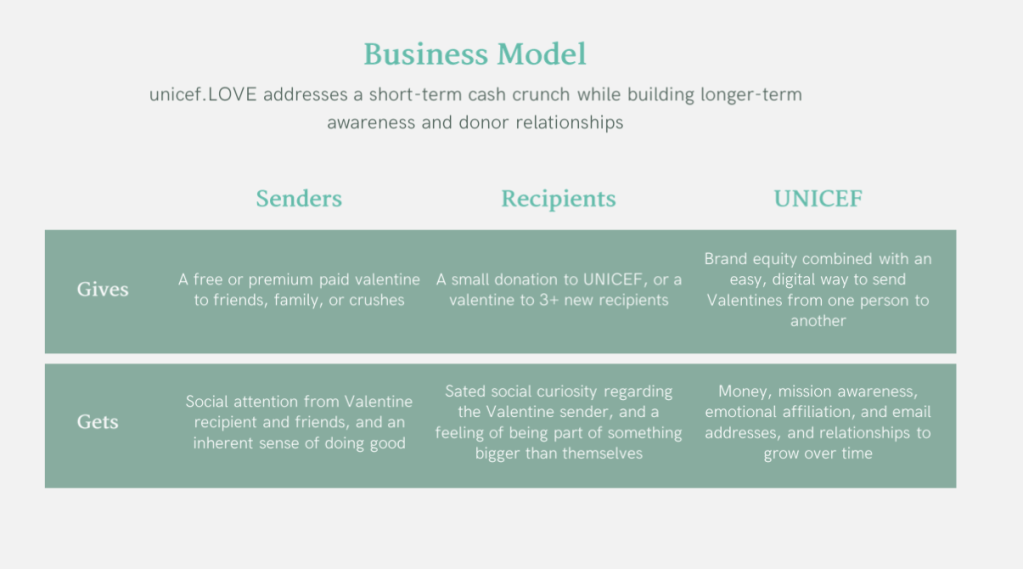
Our final product “UNICEF.Love” incorporated our users’ feedback, and we laid out next steps that UNICEF USA could explore to further pressure-test this idea.




 Amanda J. Santangelo