Sparking Behavior Change in OBGYNs
Challenge
OBGYN healthcare professionals today are complacent in diagnosing, treating, and even discussing endometriosis, a chronic pain condition that affects more than 11% of women between ages 15 – 44. When women come into their practice suffering from unresolved pain, clinicians are hesitant to bring up the conversation about the endometriosis or treatment options.
Opportunity
During the annual Kellogg – AbbVie Innovation Challenge, we were tasked with figuring out how to overcome this complacency and empower physicians to confidently talk about unresolved pain and new treatment options.
Result – We Won!
In March 2020, 11 teams (~60 students) spanning multiple Kellogg programs participated in the two-week competition. After being selected as one of five finalists, we pitched to twenty AbbVie executives virtually and won first place along with $9,000 in cash prize! AbbVie cited our human-centered approach to crafting our solution as a key differentiator in the competition.

Focus areas & Skills
- Desirability evaluation
- Problem framing
- Concept development
- Design research
Key learnings
- Physicians are humans too. Mustering up strength to ask the hard questions when they know they don’t have all the solutions is challenging. While quick fixes do not exist in healthcare, physicians are open to solutions that help signal to patients that the physicians are listening and truly care.
- Having a shared language is critical for honest dialogue between physicians and patients.
- Not every patient or clinician has experience with the therapeutic area of interest, but asking questions about analogous issues will also yield insightful findings (e.g., asking someone how they describe their chronic pain to doctors instead of only interviewing patients diagnosed with endometriosis – a much smaller community).
Our Design process
My teammates and I were both energized and intimidated by the topic. If endometriosis was a well-known condition, why is it so hard to address? We tackled this project head-on by first formulating a research plan that utilized both primary and secondary research.
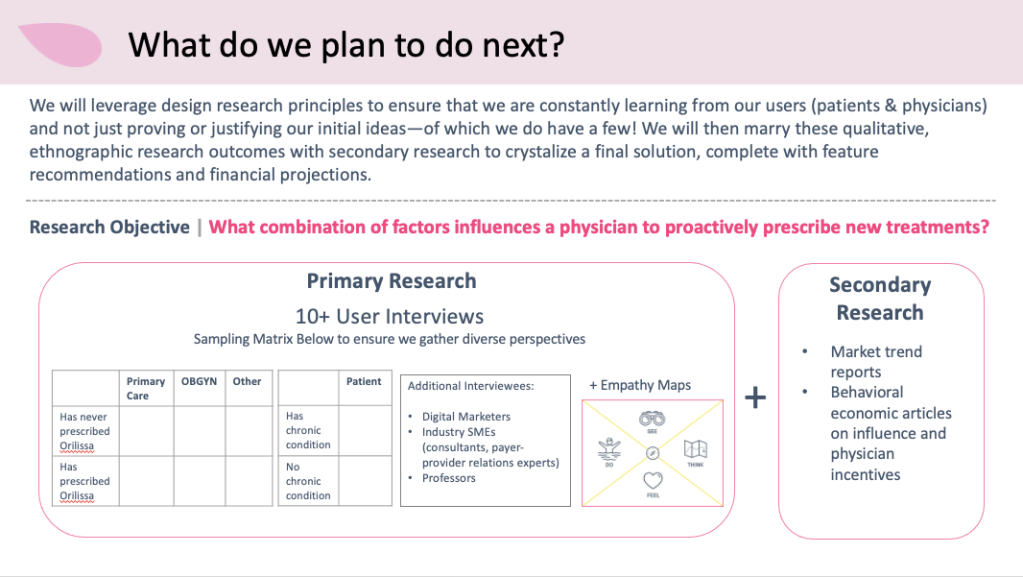
Our secondary research helped inform our interview guide, which we used to interview a diverse sampling of clinicians and patients to learn about their experiences dealing with endometriosis and general chronic pain.

Design research is all about observing, listening, and asking “why” – ultimately uncovering the motivations behind the human behavior. We used empathy maps to visualize the thought process of an OBGYN that ultimately dissuades him or her from bringing up the pain issue.
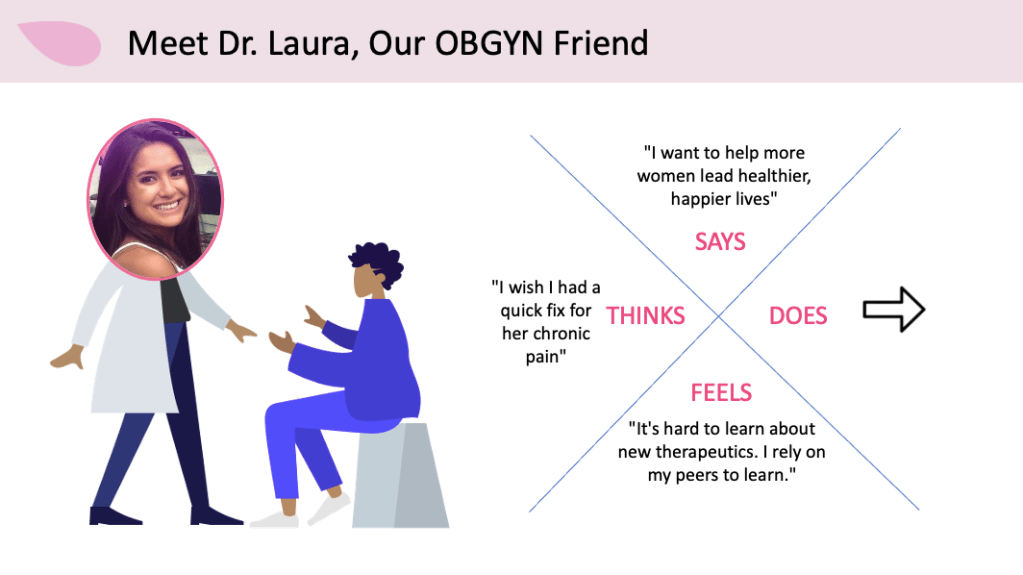

Our interviews and secondary research helped us glean three key insights into why doctors did not like to voluntarily bring up endometriosis pain with their patients, even those who were already diagnosed.

Based on these three insights, we came up with a suite of solutions and pressure-tested these ideas with real clinicians, many of whom provided us with positive feedback.


INspire
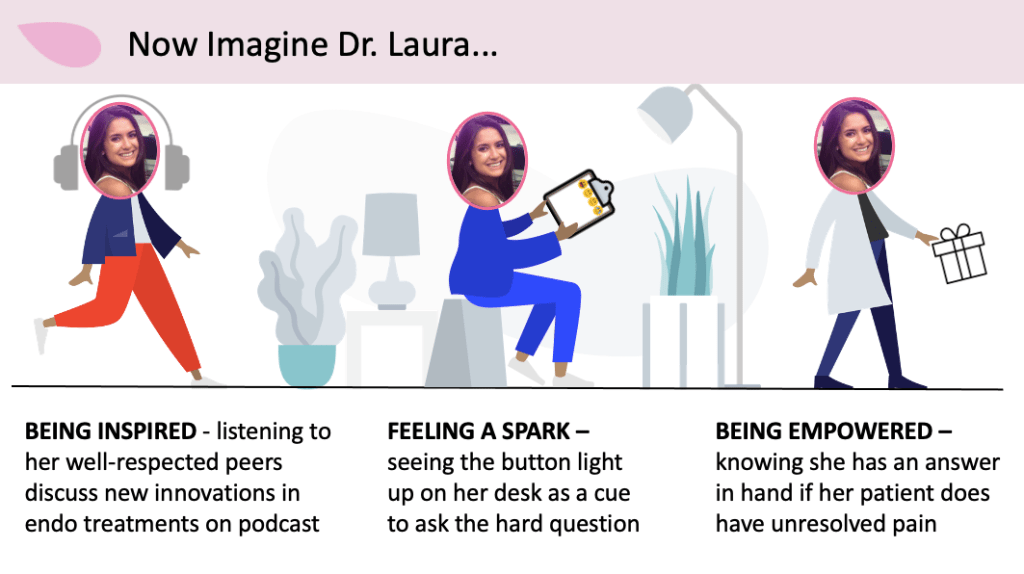
Prompt dialogue that de-stigmatizes endometriosis through engaging, curated podcasts featuring well-respected clinicians to inspire confidence in other doctors to have these tough conversations.
Spark
Enable patients to convey their pain easily by using physical buttons on the intake-form clipboard. These buttons would light up an alert on the doctor’s desk, sparking dialogue. In an overly digitalized world, a tangible button is patient-friendly and invokes more reactions.
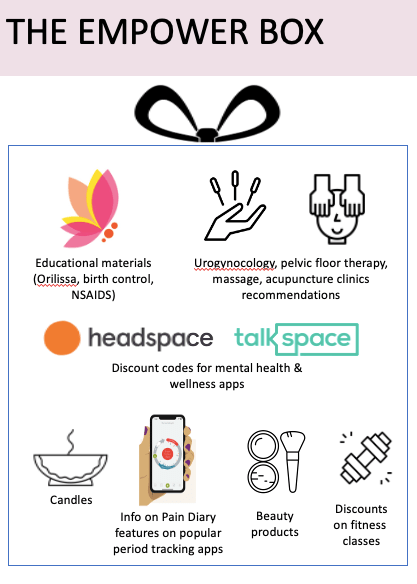
Empower
Empower the physician to initiate the conversation, then give her patient a gift box with pain alleviation resources, mindfulness app discount codes, and beautifully curated educational materials about endometriosis and links to support groups.
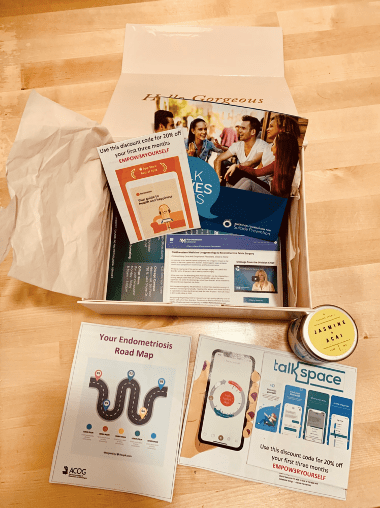
We even shared a sample Empower box with the audience. Think “Birchbox” but filled with curated pain alleviation tools and curated self-care goodies. We recognized that a simple gift box will never resolve such a complex, debilitating condition like endometriosis. Rather, it serves as a gesture from the doctor that says “I hear you. Here is what I can provide you until our next appointment, which will be dedicated to discussing your pain.”
We were happy to win first place, and we were even more thrilled to know that our research will spark some innovative approaches as AbbVie continues to de-stigmatize the endometriosis condition and help patients live happier and more fulfilling lives!
Our Dream team

 Amanda J. Santangelo